Is Broccoli Man Made? is one of those vegetables that seems simple at first glance. You see it in salads, stir-fries, soups, and almost every “healthy eating” guide ever written. But over the years, a curious question has gained popularity online and in casual conversations: is broccoli man made? Some people even claim it’s a “fake” vegetable created in a lab.
The truth is more interesting than the rumors—and far more grounded in history, agriculture, and human ingenuity. In this article, we’ll break down where broccoli really comes from, how it was developed, and what “man made” actually means when it comes to food. By the end, you’ll have a clear, science-backed answer that still keeps things easy and enjoyable to read.
What Does “Man Made” Really Mean in Food?
Before answering Is Broccoli Man Made is man made, it’s important to understand what people usually mean by that phrase. For many, “man made” sounds like something artificial, genetically engineered, or created in a laboratory using modern technology. That definition often leads to unnecessary fear and confusion.
In agriculture, however, “man made” usually refers to selective breeding. This is a natural process where humans choose plants with desirable traits—like better taste, larger size, or higher yield—and grow them over multiple generations. No lab coats, no chemicals altering DNA, just patience and observation over time.
This process has been around for thousands of years. Long before modern science, farmers were shaping crops simply by saving seeds from the best plants. Many of the fruits and vegetables we eat today exist in their current form because of this slow and natural human involvement.
The Wild Origins of Broccoli

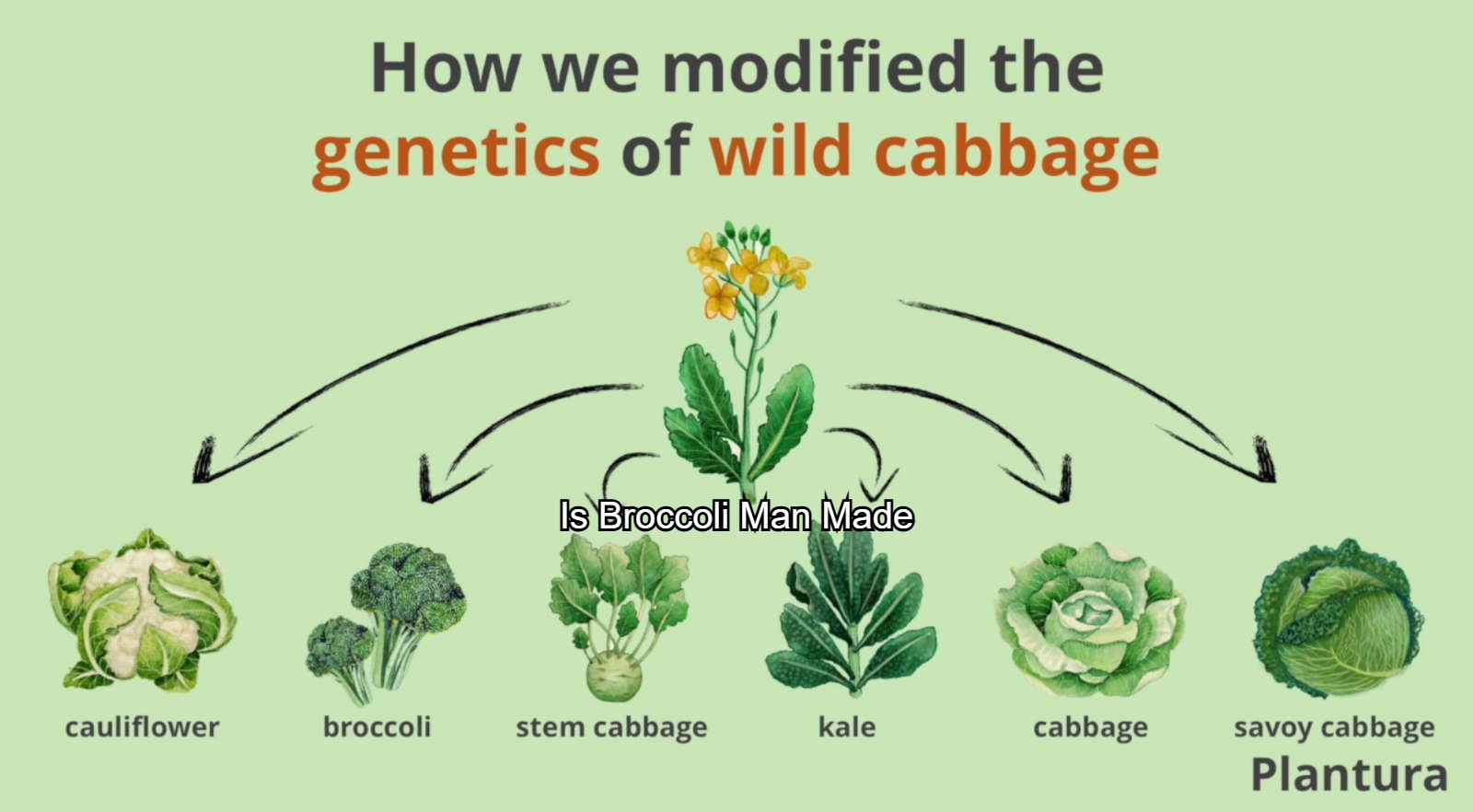
So where Is Broccoli Man Made actually come from? Broccoli traces its roots back to wild cabbage, a hardy plant that grew along coastal regions. This wild plant looked nothing like the tight green heads of broccoli we recognize today. Instead, it had loose leaves and a bitter taste.
Over time, early farmers noticed that certain plants had thicker stems or larger flower buds. These traits were useful for food, so they began favoring and replanting those varieties. This gradual selection is what eventually led to broccoli as we know it.
What’s fascinating is that broccoli isn’t alone in this story. Several familiar vegetables came from the same wild ancestor. The difference lies in which traits humans chose to emphasize over generations. Broccoli just happens to focus on the edible flower buds and thick stalks.
How Broccoli Was Developed Through Selective Breeding
The development of Is Broccoli Man Made overnight. It took many generations of careful cultivation. Farmers repeatedly selected plants with tightly clustered flower buds, thicker stems, and a milder taste. Each generation looked a little more like modern broccoli.
This wasn’t genetic engineering in the modern sense. No genes were inserted or removed in a laboratory. Instead, it was a natural reproductive process guided by human preference. The plant did all the growing on its own; humans simply decided which plants deserved to continue.
Because of this, broccoli is better described as human-influenced, not artificially created. It’s similar to how dogs were bred from wolves or how corn evolved from a wild grass. Human involvement shaped the outcome, but nature did the heavy lifting.
Is Broccoli Genetically Modified? Clearing the Confusion
One of the biggest reasons people ask “is broccoli man made” is because they assume it’s genetically modified. This is a common misconception. Broccoli is not genetically modified in the modern GMO sense.
Genetic modification involves directly altering an organism’s DNA in a lab to introduce new traits, often from different species. Broccoli doesn’t fall into this category. Its DNA has changed over time naturally through reproduction and selection, not through scientific manipulation.
Think of it like this: broccoli’s genetics changed the same way human height has changed over centuries due to nutrition and lifestyle. It’s evolution guided by environment and choice, not forced alteration. This distinction is crucial when discussing food safety and natural diets.
Why Broccoli Looks So “Unnatural” to Some People
Another reason Is Broccoli Man Made gets labeled as man made is its appearance. The tight green florets and thick stalk don’t look like something you’d stumble upon in the wild. Compared to leafy greens or root vegetables, broccoli does seem a bit engineered.
But appearance alone doesn’t tell the full story. Many natural things look unusual when compared to their wild ancestors. Bananas, carrots, and even apples looked very different hundreds of years ago. Broccoli’s compact shape is simply the result of humans favoring certain growth patterns.
In reality, if you saw wild cabbage, you probably wouldn’t recognize it as food either. The “natural” look we imagine is often shaped by what we’re used to seeing in grocery stores, not by what actually grows in nature without human help.
Is Broccoli Healthy Despite Being Human-Developed?
Is Broccoli Man Made —and this is where the conversation really matters. Whether or not broccoli is man made, its health benefits are undeniable. It’s packed with vitamins, minerals, fiber, and powerful plant compounds that support overall wellness.
Broccoli contains nutrients that help with digestion, immune support, and even cellular health. These benefits aren’t reduced because humans played a role in its development. In fact, selective breeding often improves nutritional value by making vegetables more edible and easier to digest.
If anything, broccoli is a perfect example of how humans and nature can work together. Instead of stripping away nutrition, the process refined the plant into something both healthy and widely accessible.
So, Is Broccoli Man Made or Natural? The Final Answer
The honest answer is this: Is Broccoli Man Madeis not man made in an artificial or synthetic way, but it is the result of human-guided selective breeding. It wasn’t created in a lab, injected with chemicals, or engineered using modern genetic tools.
Broccoli exists because humans noticed potential in a wild plant and patiently shaped it over generations. Nature provided the foundation, and humans helped guide its evolution. This makes broccoli both natural and cultivated.
Understanding this clears up a lot of unnecessary fear around food. Many of the healthiest foods we eat today exist because of this exact process. Broccoli isn’t fake, dangerous, or unnatural—it’s simply a success story of agriculture done right.
Conclusion: Should You Worry About Eating Broccoli?
Not at all. Asking “is broccoli man made” is a great question, but the answer should be reassuring, not alarming. Broccoli is a naturally grown vegetable shaped by centuries of farming, not modern manipulation.
If you care about eating clean, Is Broccoli Man Made foods, broccoli easily fits the bill. Its history shows patience, tradition, and a deep relationship between humans and the plants they depend on. Instead of fearing that connection, it’s worth appreciating it.